
Lead Response Time: What to Aim For and How a Small Team Hits It
What lead response time a small business should aim for, why the first hour matters more than the first day, and the 5-rung ladder of acknowledgement, reply, answer, follow-up and close that a team of 2 can keep.

Lead response time is the gap between a person filling in your form and a person from your business getting back to them, and it decides more sales than the website that generated the lead. So, if you are looking at what lead response time to aim for, and how a team without a sales department keeps it, this guide can surely help.
I build form software, so I see what happens after the submit button more often than most, and what happens is usually nothing for a day and a half.
One guide cannot design a sales process, and an enterprise team with a queue and a rota has different problems. This one covers the small-business version: what the research says about the first hour, the 5-rung ladder that turns response time into something a small team can keep, what to automate and what never to automate, and the numbers to watch.
There is nothing to download. Or, if you want a second opinion on how your leads are handled today, I am always available for a chat. Without further ado, let’s get started.
The First Hour Is the Whole Game
The most cited research on this is a 2011 Harvard Business Review study by James Oldroyd, Kristina McElheran and David Elkington, which audited how 2,241 US companies responded to a web lead. Firms that tried to contact the lead within an hour were nearly 7 times as likely to qualify it as firms that waited even one more hour, and more than 60 times as likely as those that waited a day. The average response time they found was 42 hours, and nearly a quarter of the companies never responded at all.
That is a study of larger companies, and the numbers will differ for a plumber and a SaaS product. The shape does not. A lead is a person with a problem they are trying to solve right now, and they are usually asking 2 or 3 businesses at once. The one that answers first gets to frame the conversation, and the one that answers on Thursday is answering a question that has already been settled.
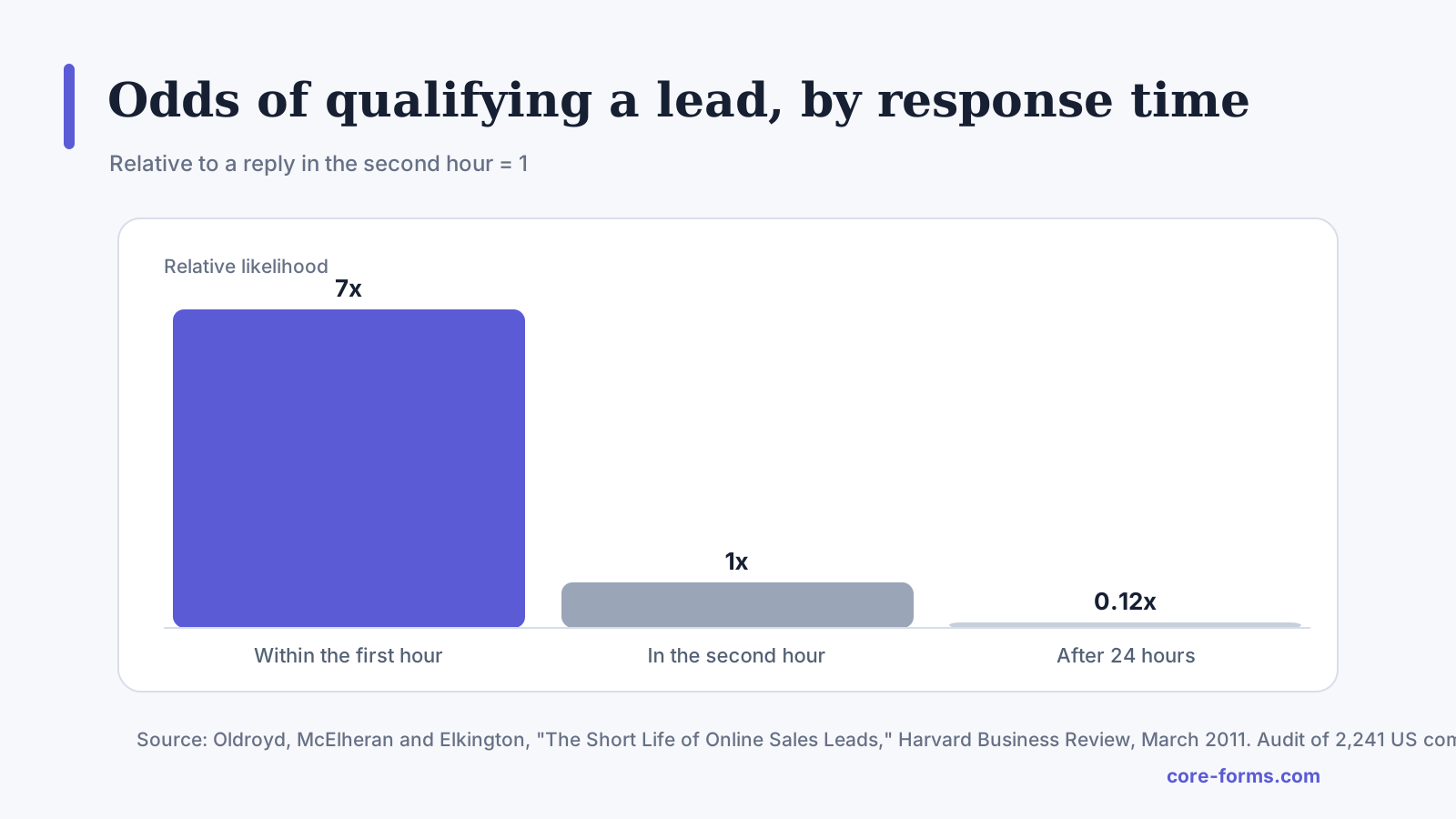 The HBR figures as a chart. The drop after the first hour is the whole argument for the ladder.
The Response Ladder
“Reply within an hour” fails for a small team because it treats every reply the same. The fix is to separate what the lead needs to hear at each point, and to automate the rungs that can be automated.
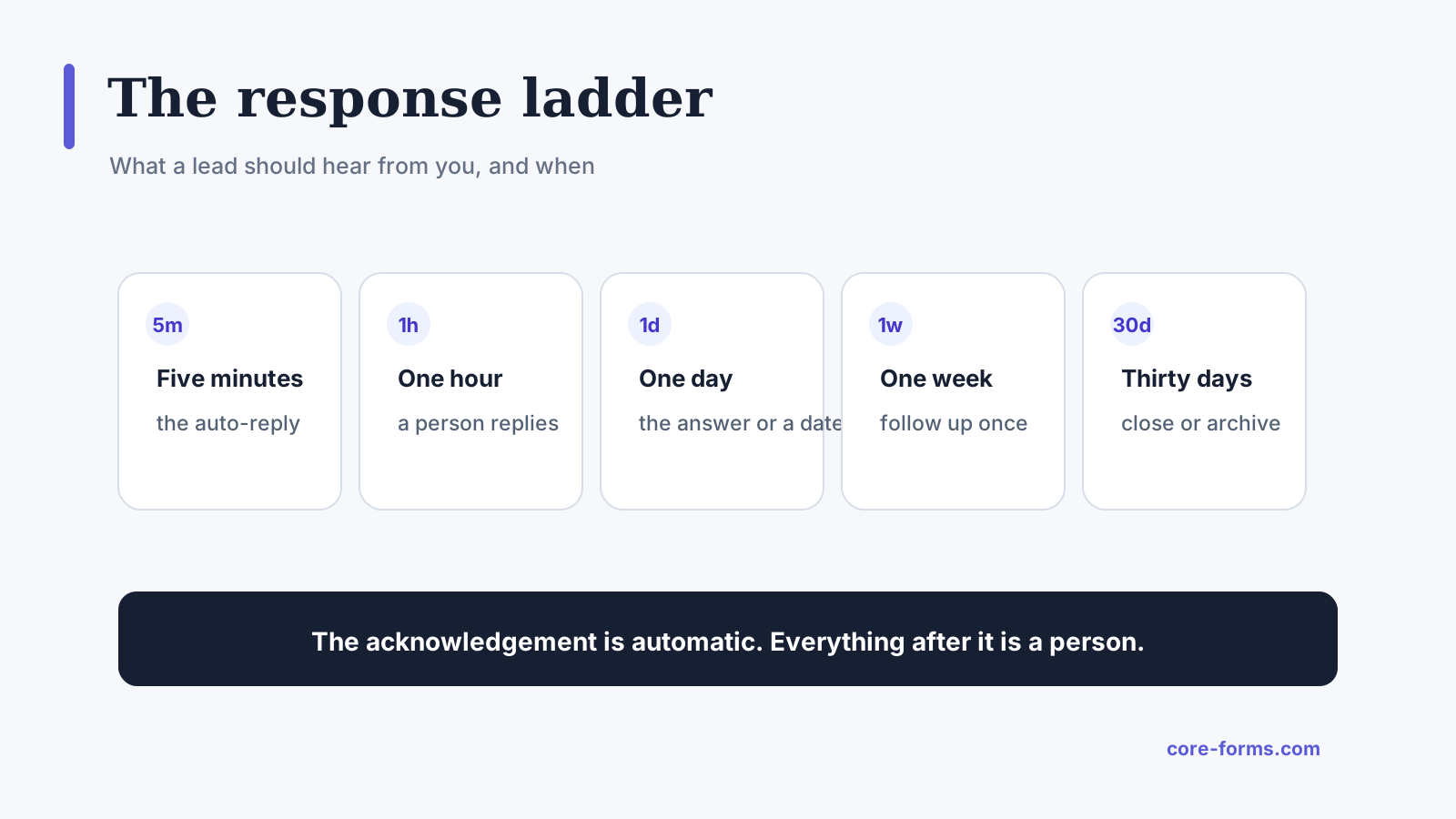 Five rungs. The first is a machine, the rest are a person.
- Five minutes: the acknowledgement. An automatic email that says the request arrived, who will reply and when. This is the auto-reply on the form, and it buys you the hour. The auto-reply guide covers the wording.
- One hour: a person replies. Not the answer, a person. “Thanks, I have read this, I will have a quote to you by tomorrow afternoon” is a reply. It takes 90 seconds and it is the rung that wins the lead.
- One day: the answer, or a date. The quote, the availability, the proposal, or a specific date it will arrive.
- One week: one follow-up. A single “did you get a chance to look at this?” One, not 4.
- Thirty days: close or archive. A last note that leaves the door open, then out of the active list.
The ladder works because the lead never wonders what is happening. Every rung tells them the next one.
What to Automate and What Never To
Three things belong to a machine, and the boundary matters:
- The acknowledgement. Always automatic, always immediate, always honest about when a person follows.
- The routing. A lead about repairs goes to the workshop, a lead about a quote goes to whoever quotes, a lead over a budget threshold goes to the owner. Recipient routes on the form do this without anyone forwarding. The lead-generation forms piece covers the setup.
- The alert. A Slack message, a text or a CRM task the minute the lead lands, so the hour rung has a chance.
One thing never belongs to a machine: the first reply. A lead can tell an automated “I’d love to learn more about your needs!” from a person, and the person wins. Ninety seconds of a human’s time is the whole investment.
Where Leads Die
In a small business, leads die in 4 places, and each has a fix:
- The shared inbox. Everyone assumes someone else has it. Fix: one owner per lead, assigned by routing, and a rule that the first person to see it claims it in the thread.
- The weekend. Friday afternoon leads are answered Monday afternoon. Fix: the acknowledgement says “Monday morning” honestly, and one person checks on Saturday for 10 minutes.
- The quote that takes a week. The lead has bought elsewhere by the time the PDF is ready. Fix: the one-hour reply names the day the quote will arrive, and a rough range on the call beats a precise number in a week.
- The follow-up that never happens. The lead went quiet after the quote and nobody asked why. Fix: one scheduled follow-up at a week, then close.
Measure Two Numbers
You do not need a dashboard. Two numbers, checked monthly:
- Time to first human reply, as a median. The timestamp on the submission and the timestamp on the reply, and a form tool that logs both gives you this without a spreadsheet.
- Share of leads that got a reply at all. In the HBR sample nearly a quarter got nothing. Yours should be 100%, and the leads that got nothing are the ones to read first.
If the median is under an hour and the share is 100%, the ladder is working. If the median is 42 hours, you have found the biggest sales problem you have, and it costs nothing to fix.
The Limits
The HBR study is from 2011 and covers 2,241 mostly larger US companies. The effect is large enough that I trust the shape for a small business, and the exact multiples are theirs, not yours.
The ladder is for inbound leads that asked for something. A newsletter signup is not a lead in this sense and should not get a call within the hour.
A one-hour reply is not possible for a one-person business on a job site all day. The honest version is the acknowledgement saying “I am on jobs until 5 and will call you this evening,” which is a promise a lead will wait for.
Speed does not fix a bad quote or the wrong price. It gets you into the conversation, and the rest is the business.
What Quietly Ruins Lead Response
An acknowledgement that promises “shortly.” The lead reads it as “never,” and a specific time would have kept them.
Automating the first reply. It reads as automated, and the lead moves to the business that sounded like a person.
Waiting for the full answer before replying at all. The lead needed to know you exist, not the price, and by the time the price is ready they have one from someone else.
Four follow-ups. One is a courtesy, 4 is a reason to mark you as spam.
Final Remarks
You now have a lead response plan a small team can keep: an acknowledgement in minutes, a person within the hour, the answer or a date within the day, one follow-up and a close, with the routing and the alert automated and the first reply never. If you keep one idea from this guide, keep this one: the first hour is the whole game, and the reply that wins it takes 90 seconds.
When someone asks me where to start, I tell them 2 things. Write the acknowledgement email today with a real time in it, because it is the only rung that costs nothing to keep. And for one month, reply to every lead within the hour yourself before deciding whether you need a system, because you will find out how many you were losing.
The auto-reply guide covers the acknowledgement, and the what happens after submission piece covers the notification and routing behind it. If you would rather talk it through for your business, I am always available for a chat.
I hope the next lead through your form hears from a person within the hour.
Where customers expect WhatsApp, the WhatsApp from a WordPress form guide gets the acknowledgement there in seconds.
FAQ
What is a good lead response time?
A person within an hour, with an automatic acknowledgement within minutes. The most cited research found firms replying within an hour were nearly 7 times as likely to qualify the lead as those that waited a second hour.
How can a small business respond to leads faster?
Automate the acknowledgement, route each lead to one named owner, alert them the minute it lands, and make the first reply a 90-second “I have read this and will have X to you by Y” rather than the full answer.
How many times should I follow up on a lead?
Once, about a week after the answer or quote, then a closing note at 30 days. More than that costs goodwill and rarely changes the outcome.