
How to Ask Customers for Reviews (and Get a Yes More Often)
How to ask for reviews from customers as a small business: who to ask, the week to ask in, the email that gets a yes, the one-link rule, and the honest way to collect reviews on your own site alongside Google.

Asking customers for reviews is a numbers game with 3 levers, who you ask, when you ask and how hard you make it, and most businesses pull none of them. So, if you are looking at how to ask for reviews from customers, for a local business, a shop, a service or a software product, without sounding desperate or breaking a platform’s rules, this guide can surely help.
I build form software, which includes review forms, and the pattern that gets reviews is the same whether they land on Google or on your own site.
One guide cannot cover the review rules of every platform, and Google, Trustpilot and the app stores each have their own. This one covers what is the same everywhere: who to ask, the window to ask in, the wording that gets a yes, the one-link rule, what to do with a bad one and how to run reviews on your own site alongside the platforms.
There is nothing to download. Or, if you want a second opinion on the email you send now, I am always available for a chat. Without further ado, let’s get started.
Ask the People Who Just Said They Were Happy
The best review request is sent to a customer who told you, an hour ago, that they were pleased. That is the whole reason to collect feedback first and ask for reviews second.
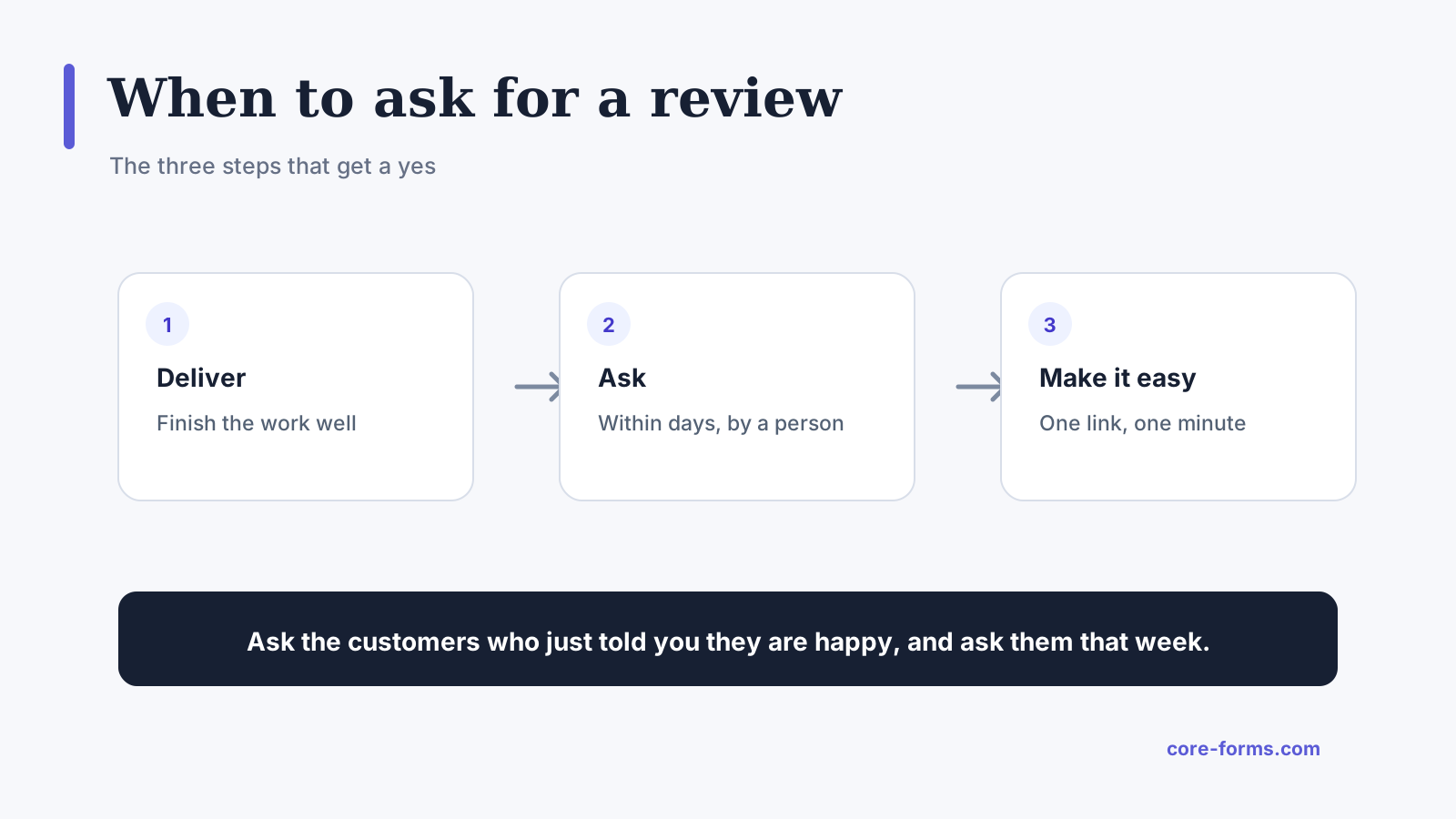 Deliver, ask, make it easy. The middle step is the one people skip.
The sequence, for a business that already asks a feedback question:
- The feedback form asks for a score after the job, the delivery or the first month.
- A 9 or a 10 gets a reply the same day: thank you, and would you say that publicly?
- A 7 or below gets a different reply, from a person, about fixing it. No review request.
A business that asks everyone for a review gets the angry ones. A business that asks the 9s and 10s gets the 5 stars, and it is not gaming anything, because those people are real and happy. Google’s policy allows asking customers for reviews as long as you do not selectively discourage negative ones or pay for them. Asking your happy customers to review is fine. Filtering unhappy customers away from the review link is the practice to avoid, so the feedback question and the review request stay separate, and anyone can leave a review at any time.
Ask in the First Week
Timing is the second lever, and the window is shorter than most people think:
- A day or 2 after delivery for a product or a job. The customer has used it, the experience is fresh, and the box is still in the hall.
- The same day for a service with a moment, a haircut, a meal, a repair. Tomorrow is already fading.
- After the first result for software or a course, which might be a week or a month in. Ask when they have something to say, not on a calendar.
After 2 weeks the answer rate falls off a cliff. The customer is happy and busy, and “sure, later” never arrives.
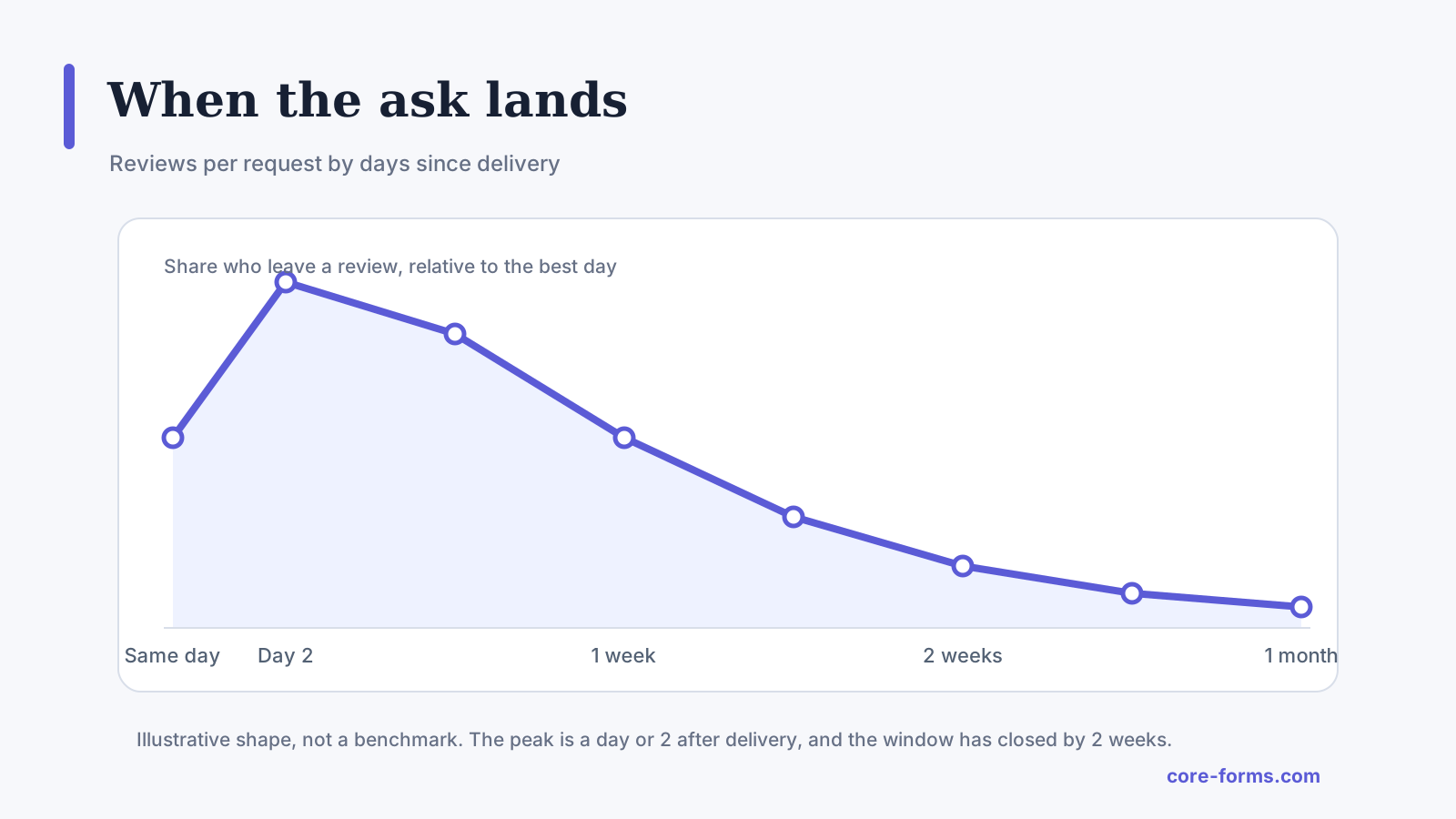 The shape of the window. Day 2 is the peak, and a month later almost nobody answers.
The Email That Gets a Yes
The request is short, personal and specific, and it has one link. A working version:
Subject: Would you mind a quick review, Aisha?
Hi Aisha,
Thanks for choosing us for the kitchen fitting. You mentioned the team left the place spotless, which they will be glad to hear.
If you have a minute, a short review would help other people in the area find us. It takes about a minute and this link goes straight to the form:
[one link]
Either way, thank you for the work. If anything comes up with the fitting, reply to this email and I will sort it.
Priya
Four things make it work. It is from a person, not the company. It quotes what the customer said, so it is not a template even when it is. It says how long it takes. And it asks once.
One Link, One Minute
The third lever is friction, and the rule is one link that lands on the form with nothing in between.
- For Google, that is the review link from your Business Profile, which opens the rating box directly. Not the search result, not the profile page.
- For your own site, that is the review form’s page, with the product or service already selected in the link.
- Never “find us on Google and leave a review.” Every step you describe instead of link is half the people gone.
Say “about a minute” in the email and mean it. A review form that asks for a title, 5 ratings and a 100-word minimum is not a minute, and the customer who opens it and sees that closes it.
Reviews on Your Own Site
Platform reviews bring new customers. Reviews on your own site convince the ones already there, and they are yours to keep, quote and display. Both are worth having, and the split is simple:
- Ask for the platform review from customers found through that platform, because that is where the next customer is looking.
- Ask for the site review from customers who came direct or by referral, and put it on the product or service page.
- Never ask for both in one email. Two links is a choice, and a choice is a reason to do neither.
The product review form guide builds the on-site version with a star rating, moderation before anything appears, and the review saved as a comment on the product so it shows where the buyer is looking.
When a Bad One Arrives
A bad review is a support ticket in public, and the reply is read by more people than the review. Three rules:
- Reply within a day, from a person, calmly, with a specific offer to put it right. Never argue in the reply.
- Take it offline after one exchange. “I have emailed you directly” ends the public thread.
- Do not ask for it to be removed unless it breaks the platform’s rules, and do not ask a customer to change it as a condition of the fix.
A page with 40 five-star reviews and 2 honest three-star ones with a good reply is more trusted than a page with 42 fives. Buyers know what a perfect score means.
The Limits
Platforms change their rules and their review links, and the mechanics here are September 2026. Check the platform’s policy page before any incentive, because most forbid them and Google forbids them outright.
A review request is one email. Two is a nudge, 3 is nagging, and a business that sends 3 loses the customer it was asking.
Reviews are for customers who finished. A request sent before the job is done, or before the product arrived, asks for a review of the anticipation, and it reads that way.
This is a small-business pattern. A marketplace seller has the platform’s own request system and its rules, and those come first.
What Quietly Ruins a Review Request
Asking everyone. The unhappy ones answer first and fastest.
Asking 3 weeks later. The moment is gone and “sure, later” never comes.
“Find us on Google.” The customer who has to search is the customer who does not review.
A template that is obviously a template. “Dear valued customer” gets deleted, and “you mentioned the team left the place spotless” gets a review.
Final Remarks
You now have a review pattern that asks the customers who just said they were happy, in the week it happened, with a short email from a person and one link that takes a minute, alongside an honest way to run reviews on your own site and to answer the bad ones. If you keep one idea from this guide, keep this one: ask the 9s and 10s the same day they told you, and make it one link.
When someone asks me why they get no reviews, I tell them 2 things. Look at when the request goes out, because it is almost always 2 weeks too late. And count the steps between the email and the rating box, because it is almost always more than one.
The feedback form tutorial builds the question that finds the 9s and 10s, and the product review form guide builds the on-site review. If you would rather talk it through for your business, I am always available for a chat.
I hope the next review that comes in is the one you were hoping for.
FAQ
When is the best time to ask a customer for a review?
Within a day or 2 of delivery for a product or job, the same day for a service with a moment, and after the first result for software or a course. After 2 weeks the answer rate drops sharply.
Is it okay to only ask happy customers for reviews?
Asking customers who told you they were happy is fine. What platforms forbid is discouraging unhappy customers from reviewing or paying for reviews, so keep the review link open to anyone and never make a fix conditional on a review.
Should I collect reviews on my own website or on Google?
Both, for different customers. Ask for the Google review from customers who found you there, and the on-site review from customers who came direct, and never put both links in one email.