
How to Collect Customer Feedback Without Wearing Customers Out
A practical plan for how to collect customer feedback as a small business: where to ask, what to ask, how often, how to read it and how to close the loop so people keep answering.

Most businesses do not have a feedback problem. They have a follow-through problem, where feedback arrives, sits in an inbox, and the customer who gave it never hears what happened. So, if you are looking at how to collect customer feedback for a shop, a service business, a course or a software product, in a way that people keep answering, this guide can surely help.
I build form software, and a good share of the feedback forms I see are set up once, run for a year and never change anything.
One guide cannot design your product research program, and a 40-question annual survey is a different exercise from this. This one covers the small-business version: the 4 moments to ask, the 2 questions that do most of the work, how often is too often, how to read what comes back without a statistician and the one habit that keeps the answers coming.
There is nothing to download. Or, if you want a second opinion on a survey you already run, I am always available for a chat. Without further ado, let’s get started.
Ask at the Moment, Not on a Schedule
The single change that improves feedback most is when you ask. A quarterly survey asks people to remember. A question 10 minutes after something happened asks them to describe.
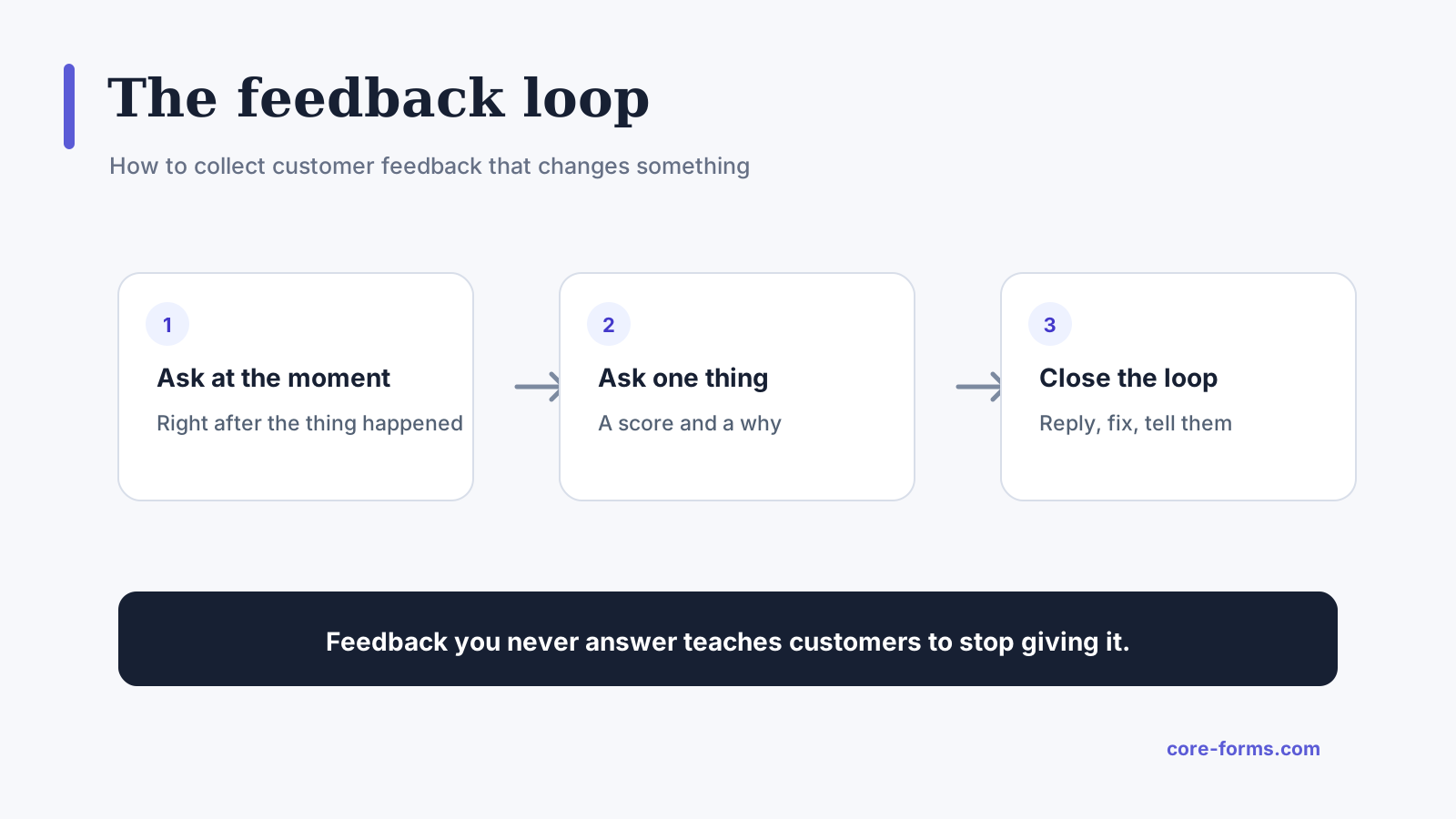 Ask right after the thing happened, ask one thing, and answer what comes back.
Four moments are worth a question, and most businesses have at least 2 of them:
- After a purchase or delivery. Did they get what they expected? The answer arrives while the box is still on the table.
- After support closes a ticket. Was the problem solved? One question, in the closing email.
- After a first month, or a first project. Is it working out? This is the moment that predicts churn.
- When someone leaves. A cancellation or a lost quote is the most honest feedback you will ever get, and the least often asked for.
A moment-based question gets a higher answer rate than a scheduled survey because the customer has something to say. That is the whole trick.
Ask One Thing and a Why
The 2 questions that do most of the work are a score and a reason, in that order.
The score can be a 0 to 10 “how likely are you to recommend us,” a 1 to 5 satisfaction rating, or a thumbs up and down. Pick one scale and keep it, because the value is in the trend, not the number.
The why is an open text box, and it is the question that matters. “What is the main reason for your score?” gets specific answers because the customer has just committed to a number and wants to justify it. The primary-reason question guide covers the wording.
Everything else is optional. A third question about what to improve is fine. A tenth question about demographics turns a 30-second reply into a chore, and the answer rate halves.
How Often Is Too Often
A customer will answer one question after each thing that happens to them, and they will not answer a survey every month. Three rules keep the balance:
- One question per event, never a survey per event. The closing-ticket question is a yes or no, not a form.
- One real survey a year, at most, and only to people who have been a customer long enough to have an opinion.
- Never the same person twice in a month. A customer who bought 3 times in March gets one question, not 3.
The suppression rule is the one that needs a system. A form tool that stores submissions can check whether an email has answered recently, and a spreadsheet works for a small list. Without it, the best customers get asked the most and stop answering first.
Where the Form Lives
For a small business the feedback form belongs on your own site, for 3 reasons that have nothing to do with features:
- The link is yours. A form at your own domain in the closing email looks like you, and a third-party survey link looks like a survey.
- The answers are yours. They sit in your database next to the customer record, exportable, and they do not expire with a subscription.
- It can route. A 2 out of 10 can go straight to whoever fixes things, and a 9 can go to whoever asks for reviews, from the same form.
The feedback form tutorial builds the form with the score, the why and the routing, and the survey question examples cover the wording when you do run the annual one.
Read It Without a Statistician
A small business gets tens of answers a month, not thousands, and the reading method has to match:
- Read every “why” the day it arrives. At small volume the text is the data, and the score is the index to it.
- Tag each answer with one word, delivery, price, support, product, staff. A column in a spreadsheet is enough.
- Count the tags monthly. The tag that grows is the problem, whatever the average score says.
- Watch the low scores, not the average. Five 2s among 50 9s is an average of 8.3 and 5 customers about to leave.
An average that moves from 8.1 to 8.3 tells you nothing. Three answers in a row that say “the invoice was wrong” tell you what to fix this week.
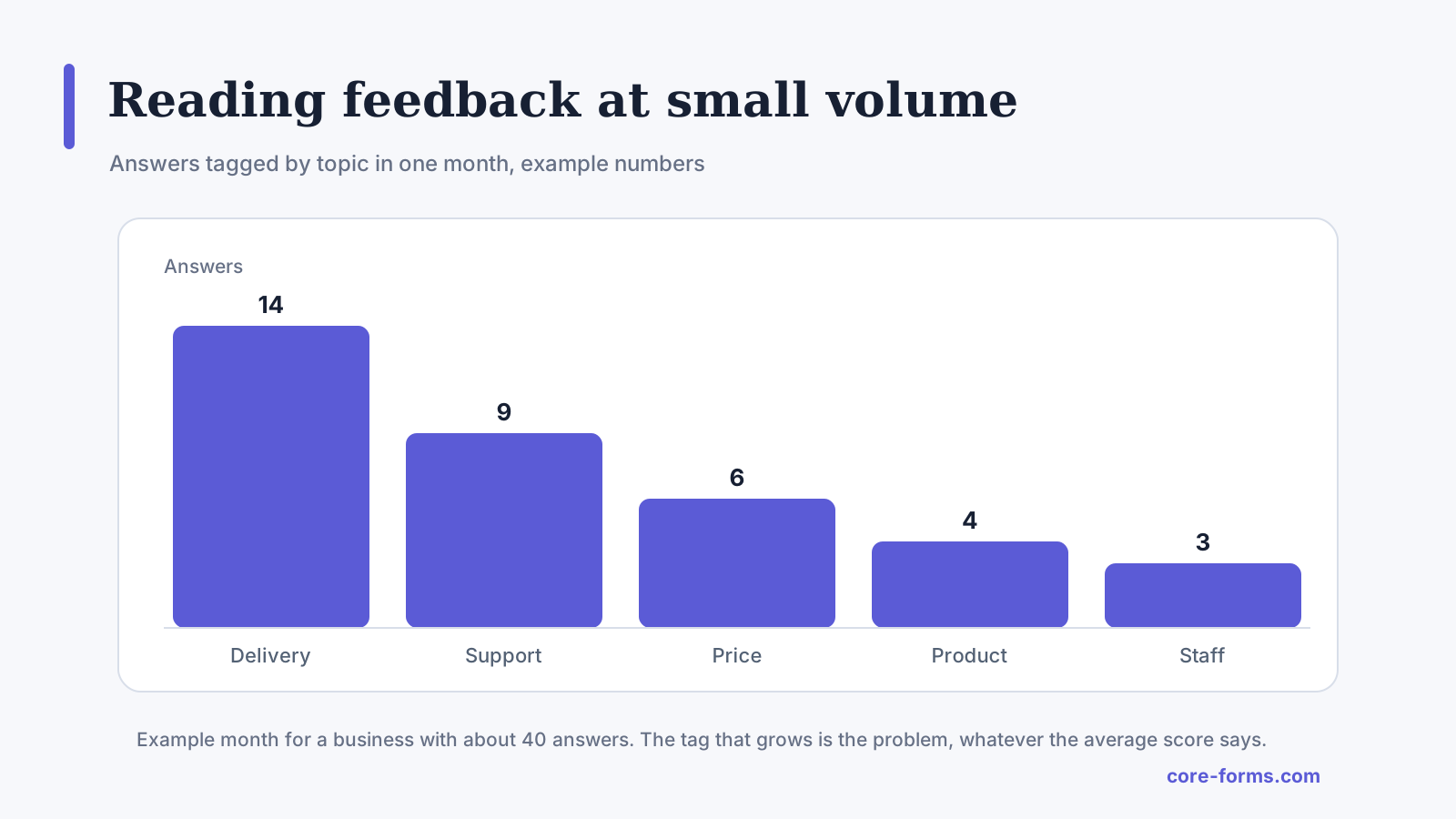 An example month of tags. Delivery is the problem this month, and no average would have said so.
Close the Loop
This is the habit that decides whether feedback keeps coming, and it is the one most businesses skip.
Every low score gets a reply from a person within a day. Not a form email, a reply: “You said the delivery was late, I have looked into it, here is what happened and what we have changed.” Half the time the customer is surprised to be answered at all, and that surprise is worth more than the fix.
Every fix gets announced to the people who asked for it. A one-line email, “you told us the login was confusing, it now works like this,” costs 10 minutes and tells 30 people their feedback did something. They answer the next question. The ones who were never told do not.
The Limits
This is a plan for a business with tens or hundreds of customers a month. A product with 100,000 users needs sampling, a research tool and someone whose job it is, and this page is not that.
A score is not a measurement of your business. It is a measurement of the customers who chose to answer, which skews toward the very happy and the very unhappy. Read it as a list of people, not a statistic.
Feedback tells you what customers noticed. It does not tell you what they would pay for, and a survey that asks “would you buy X” gets polite yeses that never turn into orders.
Anonymous feedback and feedback you can reply to are different tools. The anonymous feedback form guide covers when the first one is right.
What Quietly Ruins Customer Feedback
Asking on a schedule instead of at a moment. The quarterly survey asks people to remember, and most of them do not.
Ten questions where 2 would do. The answer rate halves and the answers get shorter.
Reading the average and ignoring the text. The average hides the 5 customers who are leaving, and the text names them.
Never replying. The customer who wrote 3 sentences and heard nothing writes nothing next time.
Final Remarks
You now have a plan for collecting customer feedback that fits a small business: a question at each moment that matters, a score and a why, a suppression rule so nobody is over-asked, a reading method that works at low volume and the reply habit that keeps the answers coming. If you keep one idea from this guide, keep this one: the reply is the program, and everything before it is just collection.
When someone asks me where to start, I tell them 2 things. Put one question in the email you already send when a job is done, because that email exists and the moment is right. And answer every low score personally for a month, then decide whether the program is worth more.
The feedback form tutorial builds the form, and the customer satisfaction survey questions cover the annual one when you get there. If you would rather talk it through for your business, I am always available for a chat.
I hope the next answer that comes in is one you can act on the same day.
A light question before the real one lifts the answer rate, and the fun multiple-choice questions are written for that.
FAQ
What is the best way to collect customer feedback for a small business?
One question at the moment something happens: after a delivery, a closed ticket, a first month or a cancellation. A score and a “why,” on your own site, with a person replying to every low score.
How often should I ask customers for feedback?
One question per event, never the same person twice in a month, and one real survey a year at most. Over-asking is the fastest way to lose the answers of your best customers.
Should customer feedback be anonymous?
For staff and sensitive topics, yes. For customers, usually no, because the value is in replying to the person, and an anonymous answer cannot be replied to.